99
99 info@finarraywealth.com



Introduction
Healthcare costs in India continue to rise every year, making medical protection an essential part of financial planning. Whether it’s a sudden hospitalization, a critical illness, or long-term medical treatment, the right insurance coverage can help protect your savings from unexpected healthcare expenses.
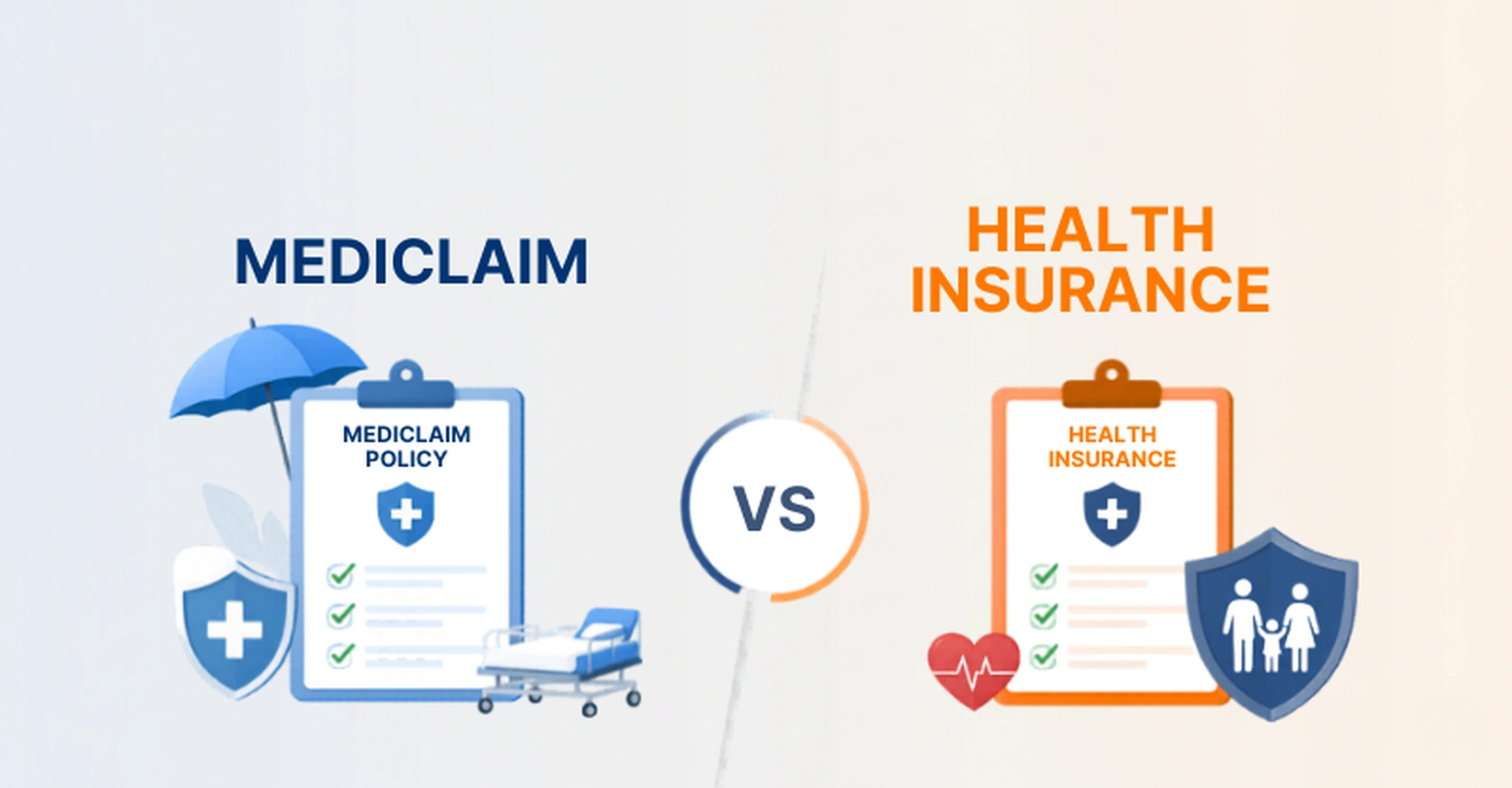
However, many individuals often use the terms “Mediclaim” and “Health Insurance” interchangeably. While both are designed to provide financial assistance during medical emergencies, they differ significantly in terms of coverage, benefits, flexibility, and long-term value.
Understanding the difference between Mediclaim and Health Insurance can help you make an informed decision and choose a solution that aligns with your healthcare needs and financial goals.
In this blog, we’ll explore the key differences, benefits, limitations, and considerations before selecting the right plan.
What is Mediclaim?
Mediclaim is a basic health coverage plan that primarily reimburses hospitalization expenses incurred due to illness or accidents.
Under a Mediclaim policy, the insurer covers expenses such as:
- Hospital room charges
- Doctor consultation fees during hospitalization
- Surgery expenses
- Nursing charges
- Diagnostic tests conducted during hospitalization
- Medication costs incurred during the hospital stay
Mediclaim policies generally offer a fixed sum insured and cover only hospitalization-related expenses.
Key Features of Mediclaim
- Covers hospitalization expenses.
- Available for individuals and families.
- Lower premiums compared to comprehensive health insurance.
- Limited coverage scope.
- Reimbursement or cashless hospitalization facility.
What is Health Insurance?
Health Insurance is a more comprehensive financial protection solution that covers not only hospitalization expenses but also various healthcare-related costs.
Modern health insurance plans often include benefits such as:
- Hospitalization coverage
- Pre-hospitalization expenses
- Post-hospitalization expenses
- Daycare procedures
- Ambulance charges
- Annual health check-ups
- Critical illness coverage
- Domiciliary treatment
- Organ donor expenses
- Alternative treatments (Ayush benefits, where applicable)
Health insurance plans are designed to provide comprehensive healthcare protection throughout different stages of life.
Mediclaim vs Health Insurance: Key Differences
| Parameter | Mediclaim | Health Insurance |
| Coverage Scope | Hospitalization expenses only | Comprehensive healthcare coverage |
| Sum Insured | Usually limited | Higher coverage options available |
| Critical Illness Cover | Generally not included | Available in many plans |
| Pre & Post Hospitalization | Limited or not available | Usually covered |
| Daycare Procedures | Limited | Covered in many plans |
| Health Check-ups | Not commonly included | Often included |
| Additional Riders | Minimal options | Multiple rider options available |
| Premium | Lower | Higher but more comprehensive |
| Family Coverage | Available | Extensive family floater options |
| Long-Term Benefits | Limited | Broad financial protection |
Advantages of Mediclaim
Mediclaim plans can be suitable for individuals seeking basic protection against hospitalization costs.
Benefits of Mediclaim:
1. Affordable Premiums
Mediclaim policies generally come with lower premium costs, making them accessible for budget-conscious individuals.
2. Simple Coverage Structure
The policy focuses mainly on hospitalization expenses, making it easy to understand.
3. Basic Financial Protection
Provides a safety net against unexpected hospital bills arising from illnesses or accidents.
4. Suitable for First-Time Buyers
Individuals seeking entry-level health coverage may find Mediclaim plans useful.
Advantages of Health Insurance
Health Insurance offers broader protection and is often considered a more comprehensive healthcare solution.
1. Wider Coverage
Covers a range of medical expenses beyond hospitalization.
2. Protection Against Rising Healthcare Costs
Higher sum insured options help combat medical inflation.
3. Preventive Healthcare Benefits
Many plans include annual health check-ups and wellness programs.
4. Coverage for Critical Illnesses
Certain plans provide financial support for major illnesses such as cancer, heart disease, and kidney failure.
5. Family Protection
Comprehensive family floater plans can cover spouses, children, and dependent parents under a single policy.
6. Tax Benefits
Premiums paid towards eligible health insurance policies may qualify for tax benefits under applicable tax laws, subject to prevailing regulations.
When Should You Choose Mediclaim?
Mediclaim may be suitable if:
- You are looking for basic hospitalization coverage.
- You have a limited budget.
- You are young and currently have minimal healthcare needs.
- You already possess additional healthcare benefits through your employer.
When Should You Choose Health Insurance?
Health Insurance may be a better option if:
- You want comprehensive healthcare coverage.
- You have a family to protect.
- You are concerned about rising medical costs.
- You seek critical illness and wellness benefits.
- You want long-term healthcare and financial protection.
Read More: Health Insurance Is Not for You – It’s for the People Who Love You
Factors to Consider Before Choosing a Plan
Before selecting a Mediclaim or Health Insurance policy, consider the following:
1. Coverage Requirements
Assess your current and future healthcare needs.
2. Family Size
Choose a plan that adequately covers all family members.
3. Sum Insured
Ensure the coverage amount is sufficient to handle major medical emergencies.
4. Network Hospitals
Check the insurer’s cashless hospital network.
5. Waiting Periods
Understand waiting periods applicable to pre-existing diseases and specific treatments.
6. Claim Settlement Support
Review the insurer’s claim support process and customer service standards.
7. Policy Exclusions
Carefully read exclusions and limitations before purchasing.
Common Misconceptions About Mediclaim and Health Insurance
Myth 1: Mediclaim and Health Insurance Are the Same
While both provide medical coverage, health insurance generally offers broader protection and additional benefits.
Myth 2: Employer Coverage Is Enough
Employer-provided coverage may not always be sufficient or portable when changing jobs.
Myth 3: Health Insurance Is Needed Only in Old Age
Medical emergencies can occur at any age. Early planning may help secure coverage before health issues arise.
Myth 4: Healthy Individuals Don’t Need Health Insurance
Even healthy individuals can face accidents, infections, or unexpected medical conditions.
Mediclaim vs. Health Insurance: A Clear Comparison
Choosing between a Mediclaim Plan and a Health Insurance Plan can be confusing, especially when both are designed to help manage medical expenses. While they share a common purpose, the level of protection they offer can differ significantly.
The right choice depends on your healthcare needs, family responsibilities, budget, and long-term financial goals.
Read More: The 5-Minute Insurance Test: Are You Really Protected or Just Paying Premiums?
Mediclaim Plan vs Health Insurance Plan
| Feature | Mediclaim Plan | Health Insurance Plan |
| Primary Purpose | Covers hospitalization expenses | Provides comprehensive healthcare coverage |
| Coverage Scope | Limited | Broad and extensive |
| Hospitalization Expenses | Covered | Covered |
| Pre-Hospitalization Expenses | Usually limited | Generally covered |
| Post-Hospitalization Expenses | Usually limited | Generally covered |
| Daycare Treatments | Limited coverage | Covered in many plans |
| Critical Illness Coverage | Generally not included | Available in many plans |
| Annual Health Check-ups | Rarely available | Often included |
| Wellness Benefits | Not available in most cases | Frequently included |
| Ambulance Charges | May be limited | Commonly covered |
| Sum Insured Options | Lower coverage limits | Higher coverage options available |
| Family Floater Option | Available | Widely available |
| Customization Options | Limited | Multiple riders and add-ons available |
| Premium Cost | Generally lower | Higher, depending on coverage |
| Long-Term Healthcare Protection | Basic | Comprehensive |
Which One Should You Choose?
There is no one-size-fits-all answer. The best option depends on your individual circumstances.
Choose a Mediclaim Plan If:
✔ You are looking for basic hospitalization coverage.
✔ You have a limited budget.
✔ You want a simple health protection solution.
✔ You already have extensive health benefits through your employer and need additional support.
Choose a Health Insurance Plan If:
✔ You want comprehensive medical coverage.
✔ You are planning for long-term financial security.
✔ You want protection against rising healthcare costs.
✔ You need coverage for your spouse, children, or parents.
✔ You prefer additional benefits such as preventive care, wellness programs, critical illness protection, and higher coverage limits.
FinArray’s Perspective
For most individuals and families today, comprehensive Health Insurance is generally considered a more holistic healthcare protection solution due to rising medical inflation and increasing healthcare needs. However, the most suitable plan should always be selected based on your financial situation, healthcare requirements, and risk profile.
Mediclaim vs Health Insurance: Myth vs Fact
Many people make insurance decisions based on assumptions rather than facts. Let’s clear up some common misconceptions.
| Myth | Fact |
| Mediclaim and Health Insurance are exactly the same. | Mediclaim primarily covers hospitalization expenses, while Health Insurance generally offers broader healthcare coverage and additional benefits. |
| Young and healthy individuals do not need health insurance. | Medical emergencies and accidents can occur at any age, making health protection important for everyone. |
| Employer-provided health coverage is always sufficient. | Employer coverage may have limitations and may not continue if you change jobs or retire. |
| Health Insurance is only useful during hospitalization. | Many plans also cover pre- and post-hospitalization expenses, daycare procedures, wellness benefits, and more. |
| Buying health insurance later is better. | Purchasing coverage earlier may help secure protection before potential health issues arise and may provide continuity benefits. |
| Higher premiums always mean a better policy. | The suitability of a policy depends on coverage, exclusions, claim support, network hospitals, and individual needs—not just premium amount. |
| Claims are always rejected by insurers. | Claims are assessed according to policy terms, conditions, documentation, and eligibility criteria. Understanding policy details can help avoid claim-related issues. |
How FinArray Can Help
Selecting the right health protection plan requires understanding your healthcare requirements, family responsibilities, and financial goals.
At FinArray, we help individuals and families:
- Understand different health insurance options.
- Compare suitable plans based on needs and budget.
- Evaluate coverage benefits and exclusions.
- Make informed insurance decisions aligned with long-term financial planning.
Our objective is to simplify insurance decisions and help you choose coverage that supports your financial well-being.
Conclusion
Both Mediclaim and Health Insurance serve the important purpose of protecting you from medical expenses. However, the difference lies in the depth and breadth of coverage.
Mediclaim can be an effective solution for basic hospitalization coverage, while Health Insurance offers comprehensive protection that extends beyond hospital bills and supports long-term healthcare needs.
As healthcare costs continue to rise, choosing the right coverage can play a crucial role in safeguarding your finances and ensuring peace of mind for you and your family.
Before making any decision, evaluate your healthcare needs, compare available options, and seek professional guidance to ensure you select a plan that aligns with your financial goals.
Need Help to Choosing the Right Health Insurance Plan?
Connect with FinArray’s experts to understand your healthcare protection needs and explore suitable insurance solutions based on your financial goals.
Frequently Asked Questions (FAQs)
1. How can FinArray help me choose between Mediclaim and Health Insurance?
Choosing the right health coverage can be challenging, especially when different plans offer varying benefits. FinArray helps you understand the key differences, evaluate your healthcare needs, compare suitable options, and identify a solution that aligns with your financial goals and family requirements.
2. I’m not sure how much health insurance coverage I need. Can FinArray help?
Yes. Selecting an appropriate sum insured is one of the most important decisions when buying health insurance. FinArray helps assess factors such as age, family size, healthcare costs, and future financial responsibilities to guide you toward suitable coverage options.
3. I already have employer-provided health insurance. Do I still need a personal policy?
Employer health insurance can provide valuable protection, but coverage limits, policy terms, and continuity may vary. FinArray can help you review your existing coverage and understand whether additional personal health insurance may help address potential coverage gaps.
4. Can FinArray help me compare different health insurance plans?
Absolutely. Comparing multiple plans can be overwhelming. FinArray helps simplify the process by explaining key features such as coverage benefits, waiting periods, exclusions, network hospitals, claim support processes, and policy flexibility so you can make a more informed decision.
5. Why should I review my health insurance coverage regularly?
Healthcare costs and personal circumstances can change over time. Regular policy reviews can help ensure that your coverage remains aligned with your current needs and financial goals. FinArray assists in evaluating whether your existing coverage continues to provide adequate protection for you and your family.
Disclaimer
This content is for educational and informational purposes only and should not be considered financial, tax, legal, or insurance advice. Please consult a qualified professional before making any financial decisions.