99
99 info@finarraywealth.com



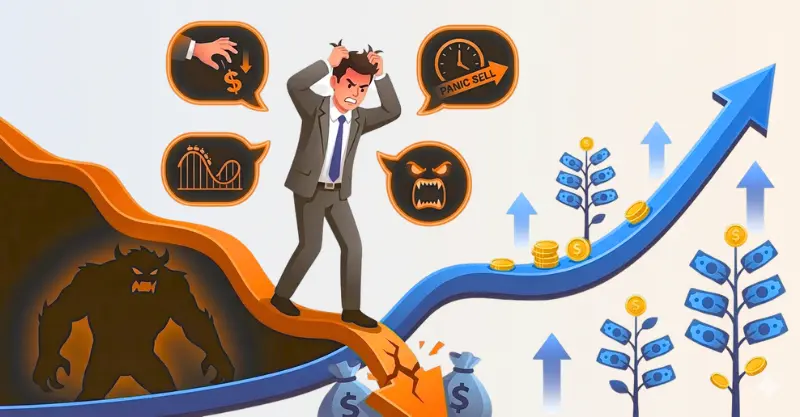
When people think about investing, they usually believe success depends on one thing – finding the right investment.
They spend time searching for:
- the best stocks
- the highest-return mutual funds
- the next big sector
- or the perfect time to enter the market
But experienced investors know something surprising.
The biggest challenge in investing is not the market.
It is how investors react to the market.
Markets naturally go up and down.
Economic news changes daily.
Financial opinions are everywhere – from television channels to social media.
In this environment, investors are constantly exposed to information, predictions, and advice.
And sometimes, reacting to all this noise can slowly reduce long-term investment returns.
Understanding this simple truth can make a big difference in how investors approach their financial journey.
1. Why Investor Behavior Matters More Than Market Movements
Markets have always moved in cycles. There are periods of growth, correction, and uncertainty.
These movements are a normal part of the financial system. But what often creates problems is how investors behave during these phases.
For example:
- When markets rise quickly, investors feel confident and invest aggressively.
- When markets fall, fear takes over, and investors exit their investments.
- When markets become uncertain, many investors simply wait and delay investing.
Over time, these emotional decisions can reduce the benefits that disciplined investing can provide.
How Emotional Decisions Quietly Hurt Investment Returns
Many investors do not realize how small emotional decisions can slowly affect long-term wealth. These situations are very common in the investment world.
Chasing Popular Investments
When a particular sector becomes popular, investors often feel they are missing out.
This leads to decisions like:
- investing heavily in trending sectors
- buying stocks after large price increases
- entering investments based on social media discussions
By the time most investors enter, prices have already reflected the information.
Holding Investments Only Out of Habit
Some investors keep certain investments simply because they have been in the portfolio for years.
Examples include:
- old stocks purchased long ago
- investments done from earlier strategies
- assets that once performed well but are no longer aligned with goals
Instead of reviewing them frequently, investors keep them due to familiarity.
Selling Good Investments During Market Falls
Market corrections are normal.
But when investors see temporary losses in their portfolios, the emotional discomfort can be strong.
This often leads to reactions like:
- selling quality investments during market declines
- shifting money suddenly into “safer” options
- exiting equities completely after volatility
Unfortunately, these decisions often happen just when markets are close to recovering.
Adding More Money to Weak Investments
Another common behavioral pattern is refusing to accept a mistake.
Instead of reassessing an investment, some investors continue adding money to it simply to justify the original decision.
Over time, this can increase exposure to investments that are no longer suitable.
2. The Hidden Cost of Waiting for the “Perfect Time”
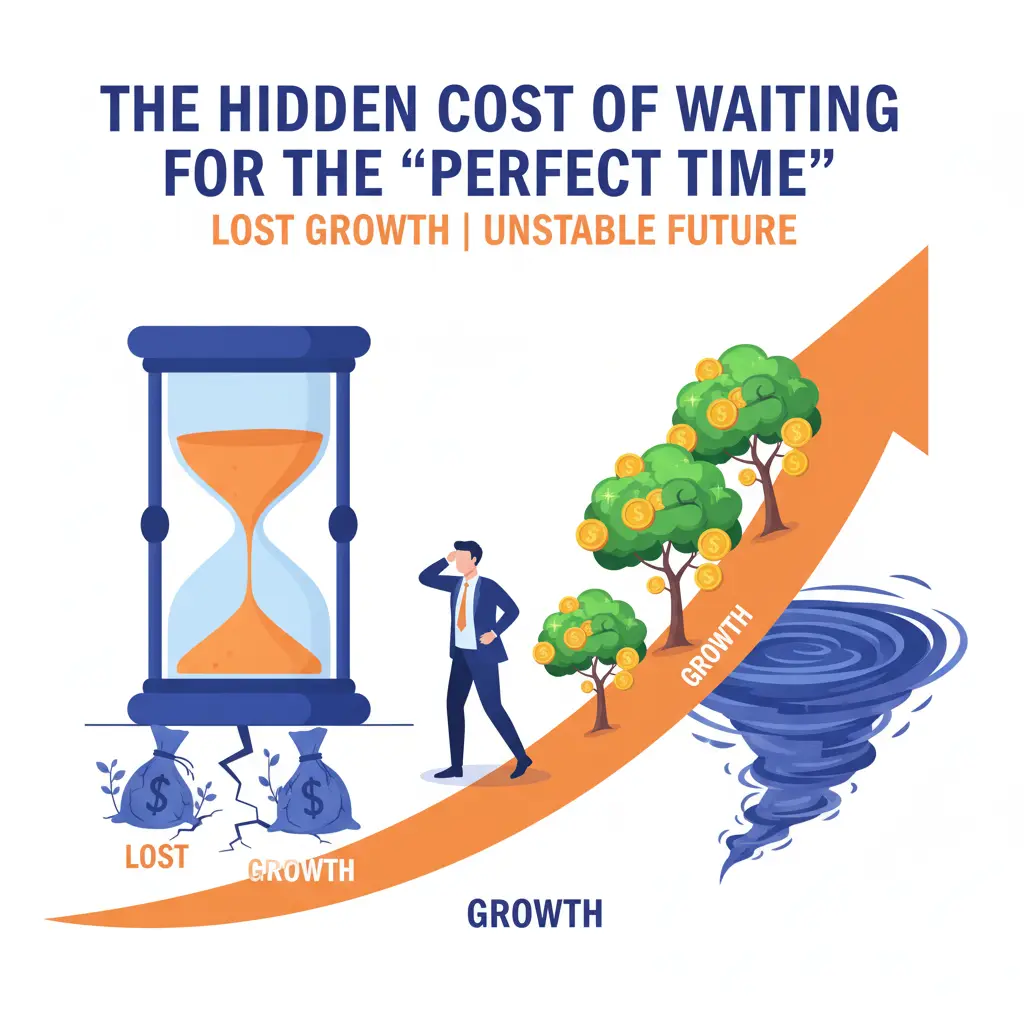
Many investors believe successful investing depends on perfect timing. So they try to wait for the “right moment”.
This often leads to actions such as:
- keeping large amounts of money idle
- delaying investments due to market uncertainty
- exiting the market temporarily and planning to re-enter later
However, markets rarely move according to perfect predictions.
In reality, missing even a few strong growth periods can significantly impact long-term returns.
For example, if an investor stays out of the market during recovery phases, they may miss some of the strongest market rallies.
Over the long run, the biggest cost may not be a wrong investment. It may simply be time lost while waiting.
When Familiar Investments Become a Risk
People naturally feel comfortable with what they already understand. This tendency often influences investment decisions as well.
Many portfolios gradually become concentrated in familiar assets such as:
- stocks that have been held for many years
- real estate investments that dominate total wealth
- investment strategies that worked in the past
Familiarity creates a sense of safety.
But markets evolve, industries change, and economic conditions shift.
Relying too heavily on familiar investments can sometimes prevent investors from exploring better opportunities.
A well-balanced portfolio usually benefits from diversification across different asset classes.
3. Too Much Information Can Create Confusion
Today’s investors have access to more information than ever before.
Every day brings new headlines about:
- global economic changes
- political developments
- inflation or interest rate movements
- market predictions from analysts
While financial awareness is important, constant exposure to information can also create pressure.
Investors may feel they must react to every headline.
This can lead to:
- frequent portfolio changes
- unnecessary buying and selling
- increased stress around investments
In many cases, reacting too often can do more harm than good.
Sometimes, the best decision is simply staying disciplined and doing nothing.
When Market Volatility Feels Personal
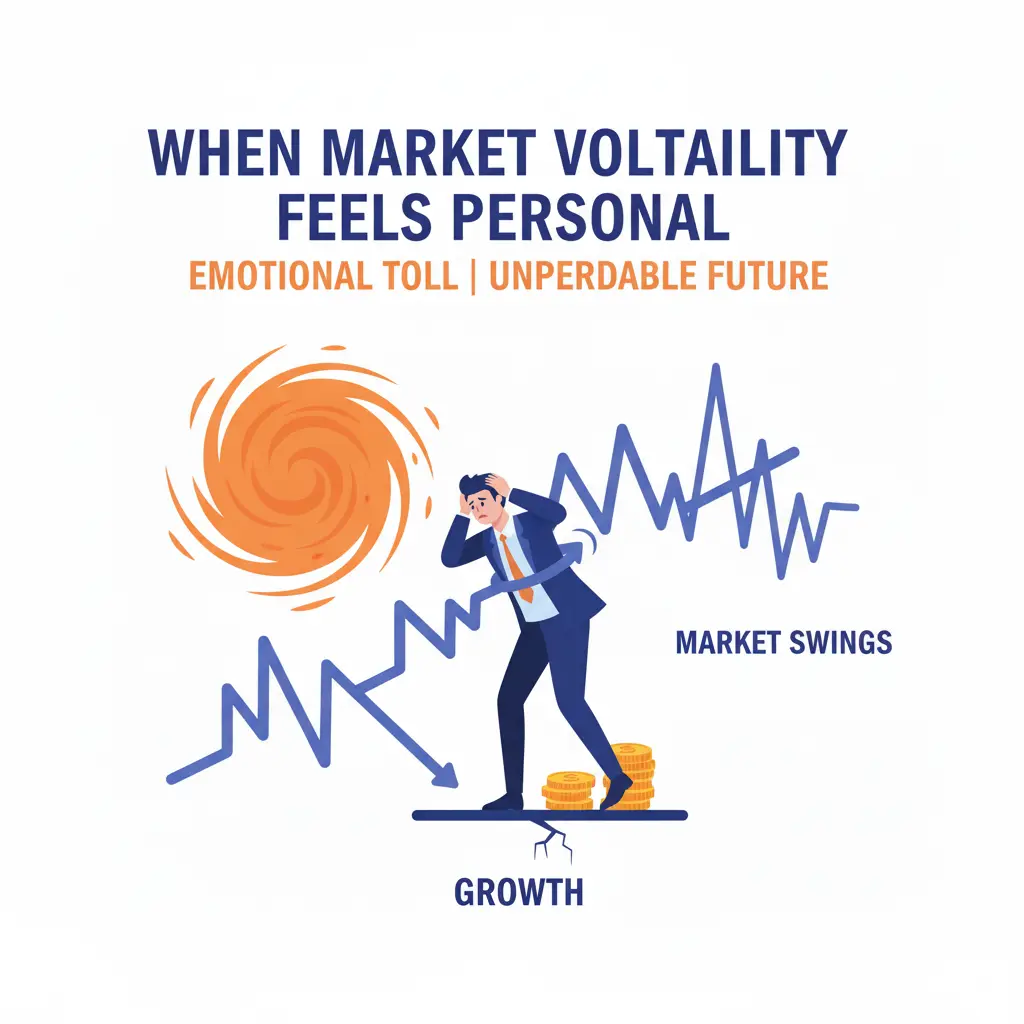
Market volatility is a normal part of investing.
But emotionally, it can feel very personal.
When investors see their portfolio value decline – even temporarily – it can trigger strong reactions.
Common responses include:
- shifting money out of equities during corrections
- moving entirely into fixed income or safe assets
- frequently changing funds or strategies
These actions may provide temporary comfort.
But they can also reduce the ability of a portfolio to recover and grow over time.
It is important to remember that short-term fluctuations are part of long-term investing.
Activity Does Not Always Mean Better Results
Many investors believe active changes improve portfolio performance.
They feel a portfolio should constantly evolve with market movements.
However, frequent activity does not always lead to better outcomes.
A portfolio that changes too often may experience:
- higher transaction costs
- inconsistent strategies
- emotional decision-making
In investing, discipline often matters more than constant action.
Successful investors understand that long-term growth usually requires patience.
What Successful Investors Do Differently
Investors who build long-term wealth often follow a different approach.
Instead of reacting to every market movement, they focus on structure and consistency.
Their investment process usually includes:
A Clear Investment Plan
They start with a structured plan based on:
- financial goals
- time horizon
- risk tolerance
This helps guide decisions even during market volatility.
Diversification Across Assets
Rather than concentrating money in a few investments, they spread exposure across:
- equities
- mutual funds
- debt instruments
- other asset classes
Diversification helps manage risk.
Periodic Portfolio Reviews
Instead of checking investments daily, they review their portfolio at defined intervals.
This allows for:
- rebalancing asset allocation
- evaluating investment performance
- adjusting strategies when necessary
Ignoring Market Noise
Successful investors do not react to every news headline.
They focus on long-term financial outcomes rather than short-term market predictions.
Why Discipline Is the Most Valuable Investment Skill
Investing is often seen as a technical activity that requires deep market knowledge. But for most investors, the most important skill is behavioral discipline.
This includes:
- staying calm during volatility
- avoiding impulsive decisions
- following a structured investment strategy
- focusing on long-term goals
When discipline becomes part of the investment process, it reduces the chances of emotional decisions.
Over time, this consistency can create stronger financial outcomes.
The Role of Structured Financial Guidance
Many investors find it difficult to manage emotions while making financial decisions. This is where structured financial guidance can help.
A disciplined investment approach can support investors by:
- providing clarity on portfolio allocation
- ensuring diversification
- maintaining long-term focus
- reducing impulsive decisions
Instead of reacting to market noise, investors can focus on building a sustainable financial strategy.
A Simple Truth About Investing
In the world of investing, markets will always fluctuate.
There will be periods of optimism and periods of uncertainty.
But history has consistently shown that long-term investing rewards patience and discipline.
For most investors, the market itself is not the biggest risk. The real challenge lies in how we respond to market movements.
Learning to stay calm, ignore unnecessary noise, and follow a structured investment plan can make a meaningful difference. Because in the long run, successful investing is not only about intelligence or predicting the market.
It is about behavior, patience, and consistency.
Disclaimer: This is for informational purposes only and should not be considered investment advice. Please consult a financial advisor before making investment decisions. Investments are subject to market risks, read all scheme-related documents carefully.